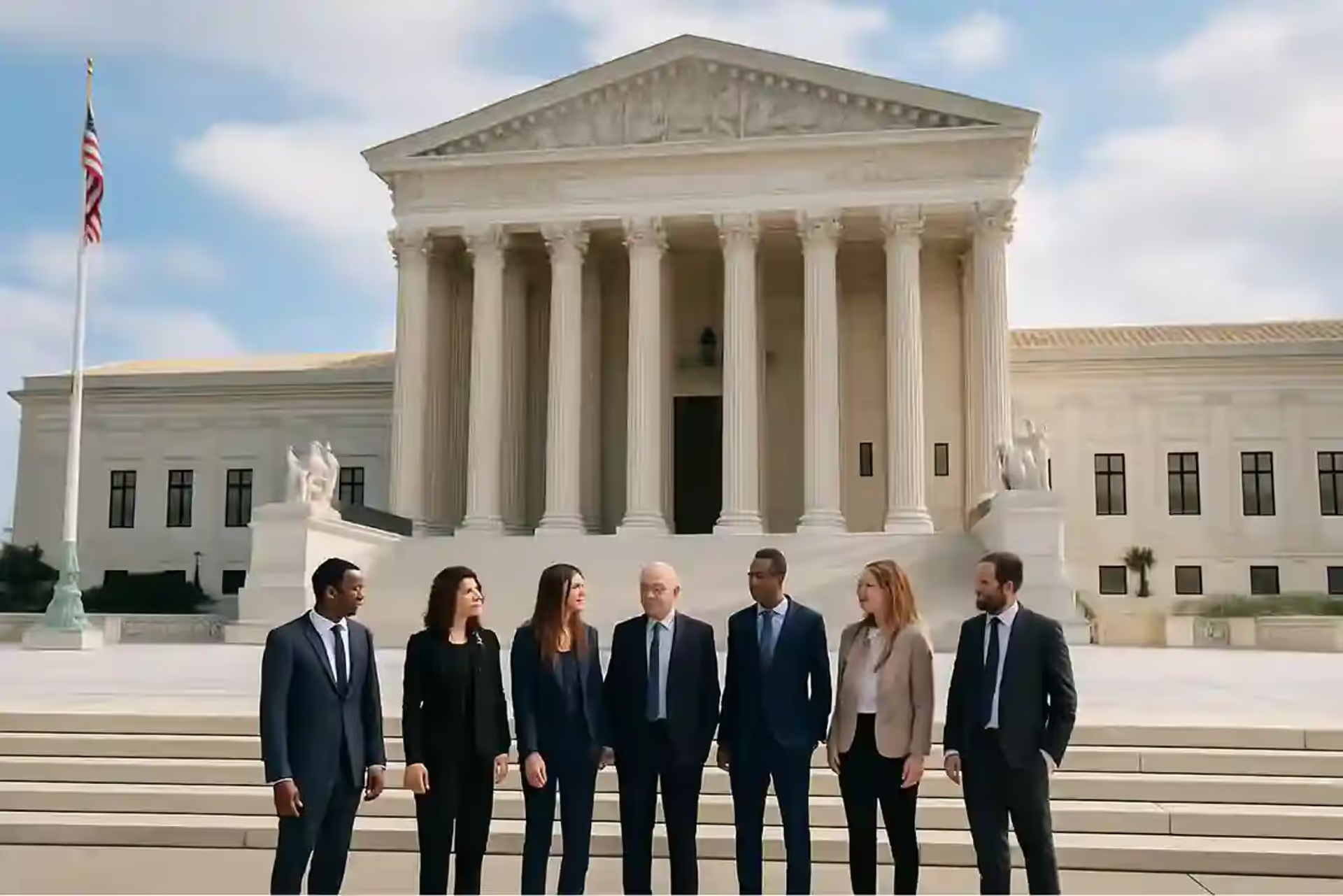
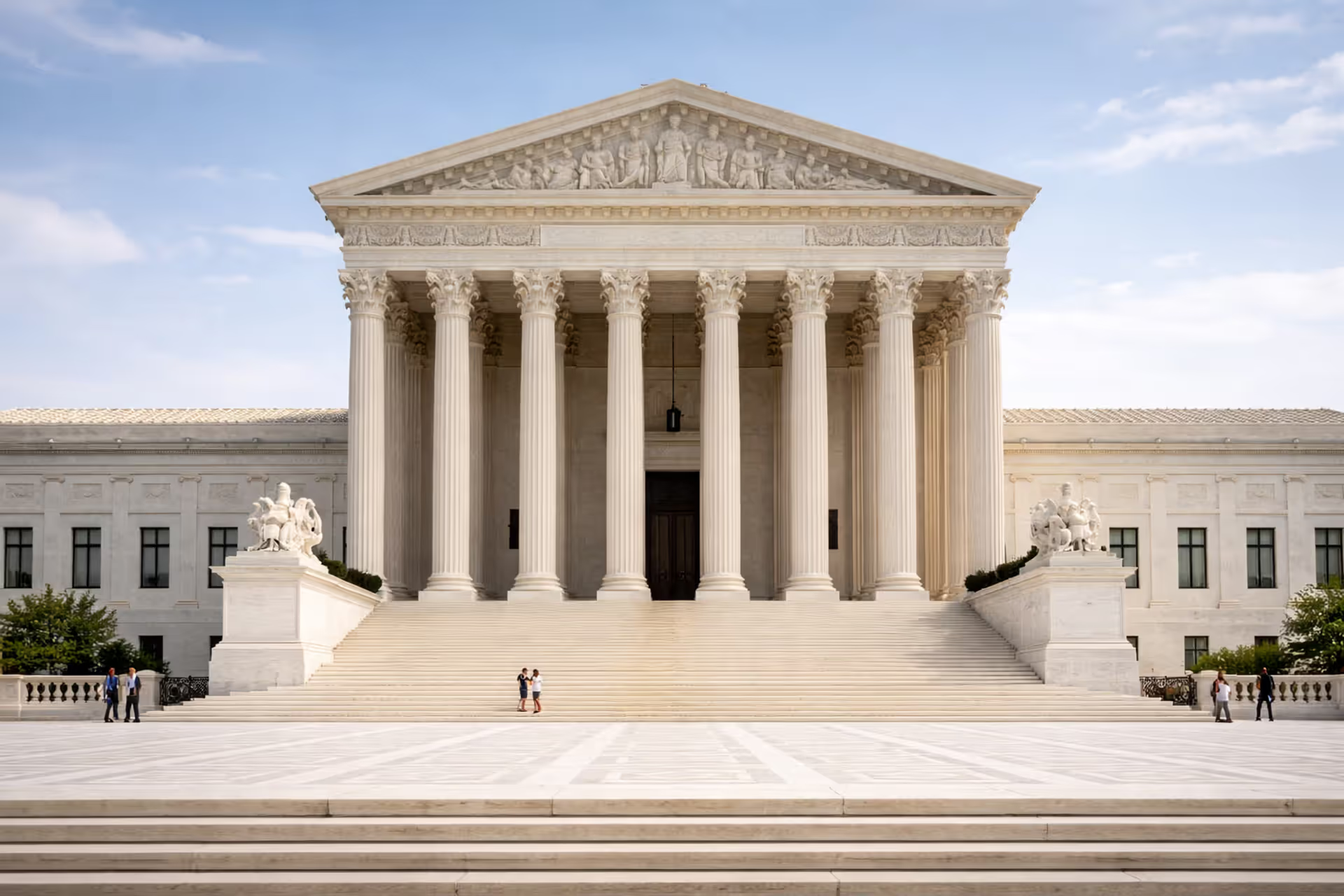
Welcome to Legal Insights — a place where the law becomes clear, thoughtful, and approachable. Here, we explore legal topics in a structured yet accessible way, sharing knowledge that helps you better understand complex legal systems and real-world cases.
You’ll find in-depth legal insights, practical service guides, and detailed case studies covering areas such as contract law, intellectual property, and landmark Supreme Court decisions.
This platform is for those who seek understanding without intimidation — whether you’re a professional, a student, or simply curious about the law. Take your time, explore the details, and feel confident as your legal knowledge grows with Legal Insights.
Legal Insights also pays attention to the broader meaning of legal developments, helping readers see how laws, court decisions, and legal doctrines influence society, business, and everyday life. By presenting legal information with clarity and context, the journal encourages careful thinking, informed discussion, and a deeper appreciation of how the legal world continues to evolve.
A clear guide to public vs private law in the U.S.: how government power differs from person-to-person disputes, what areas fall under each (criminal, constitutional, administrative vs contracts, torts, family/property), and how procedures, proof standards, remedies, and case control change your strategy.
Nobody teaches workplace rights in school — you learn them after a boss crosses a line. This guide covers six core federal laws from FLSA to NLRA, overtime exemption tests most workers fail, discrimination and retaliation protections, ADA accommodation rights, independent contractor misclassification red flags, EEOC filing deadlines that kill valid claims, and a state-by-state comparison showing h
Access a comprehensive employment contract template with clear, clause-by-clause guidance. Discover what provisions to include, avoid common drafting mistakes, and learn how to tailor terms for different roles, industries, and state requirements to ensure clarity, compliance, and strong employer protection.
"A step-by-step guide on how to form an LLC. Learn about the required documents, filing procedures, and key considerations to legally establish your business and protect your assets."
Half of all patent applications die during examination — and most failures trace back to preventable mistakes. This guide walks through pre-filing essentials including prior art searches and documentation, provisional vs. non-provisional strategy, all seven filing steps from drawings to claim drafting, realistic cost breakdowns for micro to large entities, typical 24-36 month timelines, and the c
Real employment discrimination cases reveal how courts rule on firing, harassment, and pay disputes. From the Supreme Court's Bostock LGBTQ+ landmark to multi-million-dollar EEOC settlements, this guide covers protected classes, burden-shifting frameworks, damage calculations, filing deadlines, and the evidence that separates winning claims from dismissed ones.
A vague scope clause turns "marketing services" into a $20,000 dispute. This guide breaks down every essential service agreement component — from scope of work and acceptance criteria to five payment models, termination provisions for cause and convenience, liability caps, IP assignment language, confidentiality terms, dispute resolution tiers, independent contractor status, and a complete section
Courts, not Congress, have shaped modern environmental protection. This guide covers landmark rulings that expanded and limited EPA climate authority, billion-dollar pollution penalties against BP, Volkswagen, and Duke Energy, California's emission standards battle, PFAS "forever chemicals" litigation, youth climate lawsuits, pipeline disputes involving tribal sovereignty, and criminal vs. civil e
Twelve real trademark disputes reveal where courts draw the line between brand protection and overreach. From Adidas' $304M verdict against Payless to Louboutin's red sole defense against YSL, this guide covers the likelihood-of-confusion standard, dilution claims for famous marks, why parody defenses fail for competitors, small business vulnerability to trademark bullying, and the costly mistakes
Explore landmark Supreme Court cases that transformed American law. From Miranda rights to civil liberties, discover how judicial decisions shape daily life.
Fifteen Supreme Court cases that rewrote American law — from Marbury v. Madison establishing judicial review to Dobbs overturning Roe. Each ruling is examined through its real-world impact on policing, schools, marriage, privacy, and free speech, with tables comparing before-and-after effects on daily life and guidance on researching case law yourself.
When someone's wrongful behavior injures you, tort law creates the path to compensation — but miss one of four required elements and your case collapses. This guide covers intentional torts from battery to defamation, negligence claims comprising 90% of tort litigation, strict liability for defective products, compensatory vs. punitive damage calculations, state-by-state filing deadlines, and how
A complete guide for small businesses on trademark registration and data privacy compliance. Learn how to secure your brand through USPTO registration, avoid costly infringement disputes, and comply with GDPR and CCPA requirements. Includes step-by-step processes, penalties, real cases, and practical compliance strategies to protect your reputation and avoid legal risk. Is your small business compliant with data privacy laws? Learn about key regulations like GDPR and CCPA, and the essential steps you need to take to protect customer data and avoid penalties.
The Supreme Court has repeatedly reshaped American life through a handful of pivotal rulings. This guide traces the most consequential decisions — Marbury v. Ma
Hiring the wrong lawyer can cost more than the legal problem itself. This guide covers every step of selecting the right attorney: understanding eight major leg
The Supreme Court of the United States plays a pivotal role in interpreting the Constitution and shaping the legal landscape of the nation. Its decisions not only resolve critical disputes but also influence public policy, societal norms, and individual rights. This article explores recent Supreme Court decisions that have had a profound impact on American law and society, providing detailed analyses and implications for various sectors.
Intellectual property (IP) is a broad term that refers to creations of the mind—innovations, artistic works, designs, brand names, and trade secrets, to name a few—each of which can be protected under distinct legal frameworks. In essence, IP law allows individuals and businesses to claim ownership of intangible creations, preventing unauthorized use and ensuring rightful recognition and financial gain for the creator.
Federal environmental compliance shifted sharply in 2024: stricter PM2.5 standards, mandatory closed-cycle cooling for major intakes, expanded RCRA pharma waste coverage, tougher oil & gas methane monitoring, and broader TRI chemical reporting. Add stricter state rules and faster enforcement, and missed deadlines can trigger major penalties and shutdown risk.
Access a comprehensive employment contract template with clear, clause-by-clause guidance. Discover what provisions to include, avoid common drafting mistakes, and learn how to tailor terms for different roles, industries, and state requirements to ensure clarity, compliance, and strong employer protection.
The federal government is simultaneously prosecuting monopolization claims against Google, Apple, Amazon, and Meta — the four most valuable technology enterprises in the nation. One court already declared Google's search operation an illegal monopoly, only to prescribe behavioral fixes rather than a corporate breakup. The FTC's attempt to reverse Meta's decade-old Instagram and WhatsApp purchases collapsed at trial in late 2025, triggering an immediate appellate challenge. And a pending Amazon action, heading for a courtroom showdown in 2026, may permanently alter how platform-based commerce operates.
Not since prosecutors took aim at Microsoft a quarter-century ago has American competition policy generated this much courtroom activity. Anyone tracking big tech antitrust updates — attorneys, investors, policy analysts, or citizens curious about why trillion-dollar companies keep appearing in federal dockets — is watching a landscape in rapid transformation. What happens in these proceedings will dictate the outer limits of corporate scale, reshape how deal-making gets policed, and reveal whether government agencies can effectively check platform power once it takes root.
Note: Status descriptions below rely on public filings current through early 2026. Judicial calendars are inherently unstable — cross-reference with agency press releases or PACER records for real-time accuracy.
The content on Legal Insights is provided for general informational purposes only. It is intended to offer insights, commentary, and analysis on legal topics and developments, and should not be considered legal advice or a substitute for professional consultation with a qualified attorney.
All information, articles, and materials presented on this website are for general informational purposes only. Laws and regulations may vary by jurisdiction and may change over time. The application of legal principles depends on specific facts and circumstances.
Legal Insights is not responsible for any errors or omissions in the content, or for any actions taken based on the information provided on this website. Users are encouraged to seek independent legal advice tailored to their individual situation before making any legal decisions.